

The Importance of Credit Score to Maintain Economic Growth Resilience
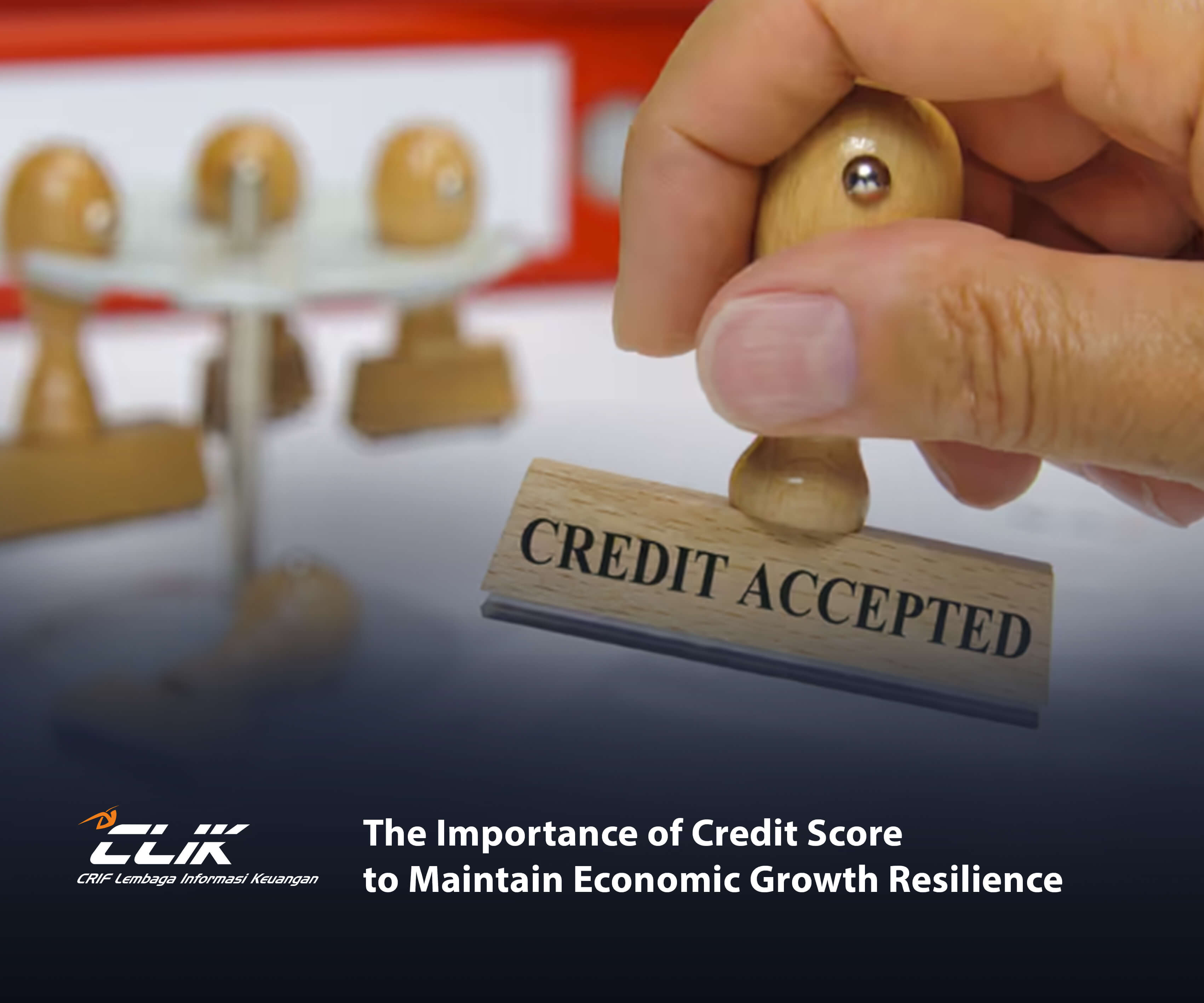
Source: FORTUNE Indonesia, 05-09-2024
Reporter: Suheriadi
Jakarta, FORTUNE – Lembaga Pengelola Informasi Perkreditan (LPIP) or credit score assessment institution is considered to have an important role in maintaining the resilience of national economic growth. How could it not be, the number of MSMEs in Indonesia has reached 66 million by 2023, becoming the backbone of the national economy. To achieve healthy and quality funding, a credit score assessment institution is needed to make it easier for MSMEs to improve their business.
President Director and CEO of PT CRIF Lembaga Informasi Keuangan (CLIK), Leonardo Lapalorcia stated that it is not impossible to spur economic growth or Indonesia’s Gross Domestic Product (GDP) by up to 8 percent in the coming years as long as all segments continue to be strengthened, such as literacy, MSME financing, and maintaining the ratio of bad debts in financial institutions.
“Is it enough to achieve Indonesia’s 8 percent GDP growth? It may not be easy, but this dynamic is still positive. It depends on the speed of the government’s efforts. But in fact, there is a lot of financing, but the risk is also increasing, which must be anticipated by credit score assessment institutions,” said Leonardo when met in Jakarta on Thursday (5/9).
Productive credit is still low, 16% of it is in collectibility three
Leo also revealed, based on data owned by CLIK, the current credit for the productive sector is still relatively low. This condition makes financial institutions anticipate an increase in bad credit or Non-Performing Loans (NPL).
Moreover, Leo continued, from the productive credit, 16 percent of debtors experienced an increase in credit level to collectibility three or doubtful due to some being in default in the last 12 months.
“The problem is, in my opinion, these increases in collectibility are because MSMEs have to pay installments with high interest, and it burdens MSMEs, so it is more difficult,” said Leo.
Moreover, based on data from the Financial Services Authority (OJK), after the Covid-19 pandemic, MSMEs’ businesses were hit hard. So the gross NPL of banking in the MSME segment is still increasing to 4.04 percent as of June 2024.
Meanwhile, Bank Indonesia (BI) also noted that MSME credit distribution from national banks still grew by 5.1 percent in July 2024 or reached IDR 1,375 trillion. This condition is believed to continue to grow along with the growing MSMEs.
The importance of assessing credit scores in two layers
On the other hand, although the level of adoption of financial services in Indonesia is already quite high, namely around 85 percent of the population has used financial services, the ratio of gross domestic product (GDP) to household debt is still relatively low at 16 percent.
This number is much lower compared to countries such as India and the Philippines which are at an average of 30 percent. The condition in Indonesia shows a significant gap between greater demand for loans with competitive interest rates and inefficiencies in the utilization of financial data, as well as the need to improve creditworthiness evaluation.
To address the current challenges, three Credit Information Management Institutions in Indonesia — PT CRIF Lembaga Informasi Keuangan (CLIK), PT Kredit Biro Indonesia Jaya (CBI), and PT PEFINDO Biro Kredit (idScore) — have collaborated to form the Asosiasi Pengelola Informasi Kredit (APIIK). This strategic collaboration aims to strengthen credit infrastructure in Indonesia and create a more inclusive and efficient financial system.
APIIK also collaborated with EY Parthenon to conduct a study on Indonesia’s credit reporting ecosystem. This was done in order to provide a comprehensive view to regulators and stakeholders regarding the condition of the national credit infrastructure. This study aims to understand the performance and dynamics of the credit reporting sector in Indonesia, understand the global credit reporting industry, especially the interaction between the Public Credit Registry (PCR) and the Private Credit Bureau (PCB), and identify various gaps and opportunities that have the potential to improve credit assessment capabilities.
The results of this study recommend Indonesia maintain a dual system approach to its credit reporting infrastructure, where PCR and PCB have different but complementary roles.
In this approach, PCR (SLIK OJK) serves as a centralized database for data from financial institutions (FIs), while PCB collects diverse data from non-financial institutions (Non-FIs) to produce detailed reports and credit scores that assess creditworthiness and credit usage patterns. This approach aims to increase financial inclusion in the unbanked population, ensure robust risk assessment, maintain secure data privacy, and improve the efficiency and effectiveness of the overall credit reporting system.
![[:id]Tingkatkan Infrastruktur Kredit: Studi APIIK 2024 pada Ekosistem Pelaporan Kredit di Indonesia[:en]Enhancing Credit Infrastructure: APIIK 2024 Study on the Indonesian Credit Reporting Ecosystem[:]](https://cbclik.com/wp-content/uploads/2024/09/Press-Release-Enhancing-Credit-Infrastructure-APIIK-2024-Study-on-the-Indonesian-Credit-Reporting-Ecosystem-150x150.jpg?crop=1)
![[:id]Bos CLIK Beberkan Kekuatan Perbankan RI di Era Transisi Pemerintahan[:en]CLIK’s Boss Discloses the Strength of Indonesian Banking in the Era of Government Transition[:]](https://cbclik.com/wp-content/uploads/2024/09/InfoBank-Photo-150x150.jpg?crop=1)