

Steps to Clear and Restore Your Credit Score (BI Checking)
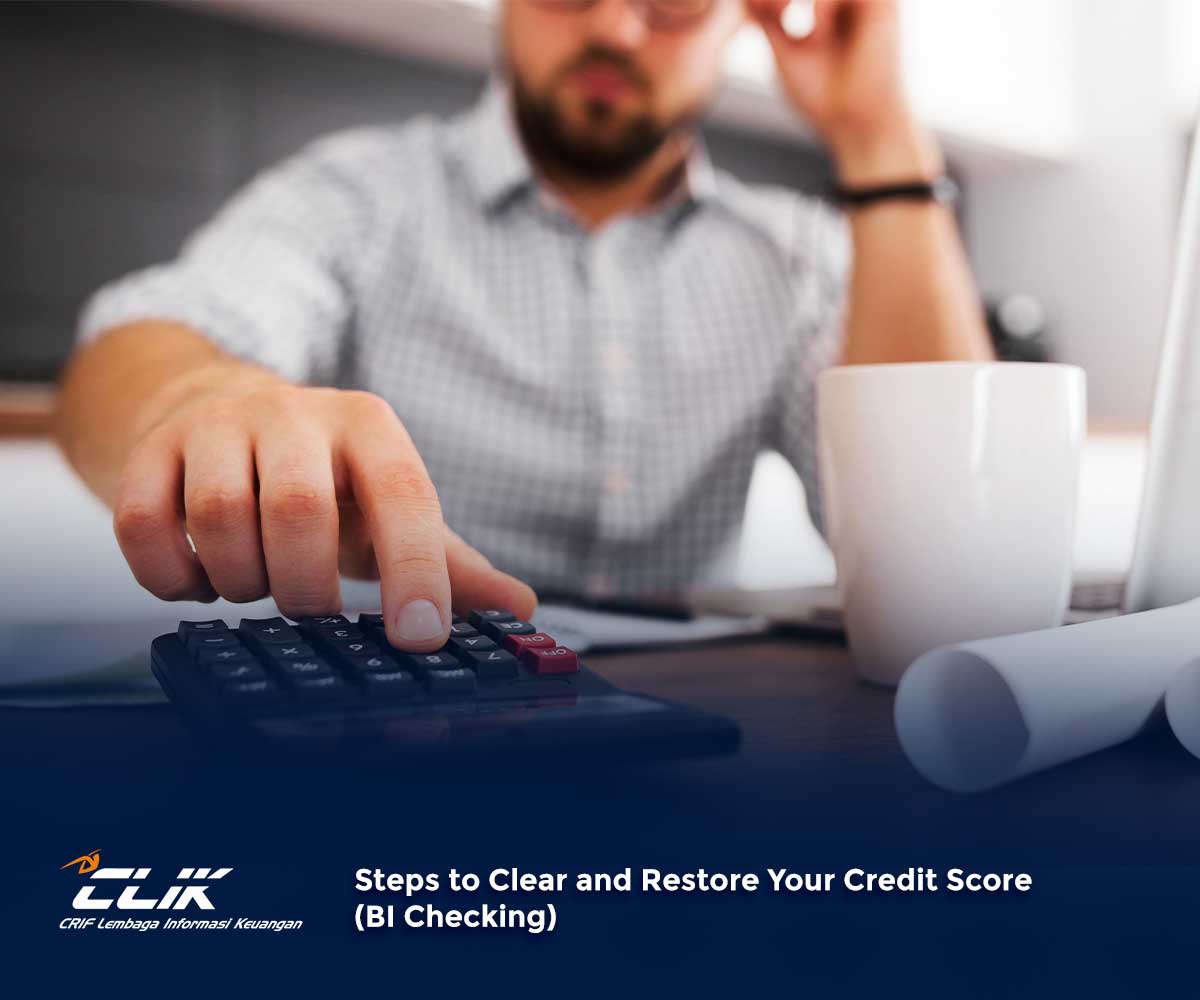
Your credit score—previously referred to as BI Checking in Indonesia—plays a key role when applying for loans from banks or financial institutions. A poor credit record can immediately affect whether your application gets approved. But don’t worry, there are practical ways to restore your credit score and make your record look healthier to lenders.
How to Clear and Restore Your Credit Score
1. Check Your Current Credit Status
The first step is to find out where you stand.
- Use the OJK’s SLIK service (Financial Information Service System), which can be accessed online.
- You can also visit an OJK office or designated bank branch to request your credit report.
This report includes your loan history, outstanding payments, and payment status.
Knowing your current condition helps you plan the right steps to fix it.
Read More: The Importance of Credit Score to Maintain Economic Growth Resilience
2. Settle All Outstanding Debts
Unpaid debts are the main reason for a low credit score, so clearing them is essential.
- Focus on paying off high-interest loans first.
- If you can’t pay everything at once, ask your lender about loan restructuring to make the payments more manageable.
- Always pay on time, since every delay will be recorded and can hurt your score.
Paying off your debts completely is the key to “cleaning up” your credit record.
3. Request a Settlement Letter
Once you’ve paid everything off, don’t forget to ask for proof.
- A settlement or clearance letter from your bank or lender is official evidence that your debt has been fully paid.
- This document is very important when you report the update to OJK or a credit bureau. Without it, your record might still show as unpaid.
4. Report the Update to OJK or a Credit Bureau
After you’ve settled your debts, the next step is to update your record.
- Bring your settlement letter and supporting documents to an OJK office.
- You can also contact a registered credit bureau that manages financial data.
This ensures that your credit profile is updated and no longer shows outstanding debt.
5. Wait for Data to Be Updated
Credit record updates don’t happen instantly.
The process usually takes one to three months before the changes appear in the system.
During this time, make sure you don’t miss any new payments or take on unnecessary debt.
Patience is key. Updates depend on data transfers between financial institutions.
6. Maintain a Good Credit History
Once your score has improved, the next goal is to keep it that way.
- Pay all your installments and credit card bills on time.
- Borrow responsibly, only for what you need.
- Avoid applying for too many loans at once.
- Ideally, your monthly debt payments shouldn’t exceed 30% of your income.
With consistent financial habits, your credit score won’t just recover. It can grow stronger over time.
Read More: Building a Better Credit Score: Essential Tips for Responsible Credit Card Use
Restoring your credit score isn’t an instant process, but it’s completely achievable with discipline and consistency. By paying off what you owe and maintaining good payment behavior, your financial record can look clean and reliable again, opening up more opportunities for future loans.
![[:id]Workshop CLIK x Astra Integrasi Digital: Strategi Manajemen Risiko Hadapi Tantangan Ekonomi 2025[:en]CLIK x Astra Digital Integration Workshop: Risk Management Strategies to Face 2025 Economic Challenges[:]](https://cbclik.com/wp-content/uploads/2025/10/1200x1000px_Workshop-CLIK-x-AID-150x150.jpg?crop=1)
![[:id]Apakah Kol 2 Artinya Masih Bisa Kredit?[:en]Does “KOL 2” Mean You Can Still Apply for Credit?[:]](https://cbclik.com/wp-content/uploads/2025/10/1200x1000px_-Cara-Cek-Skor-Kredit-Online-3-150x150.jpg?crop=1)